

Backstage Paris
Major moves at the Musée d'Orsay, the chicest mahjong mats, and Matthieu Blazy's red carpet score. And forget about Williams Sonoma's latest green venture.
Masterpiece Theater
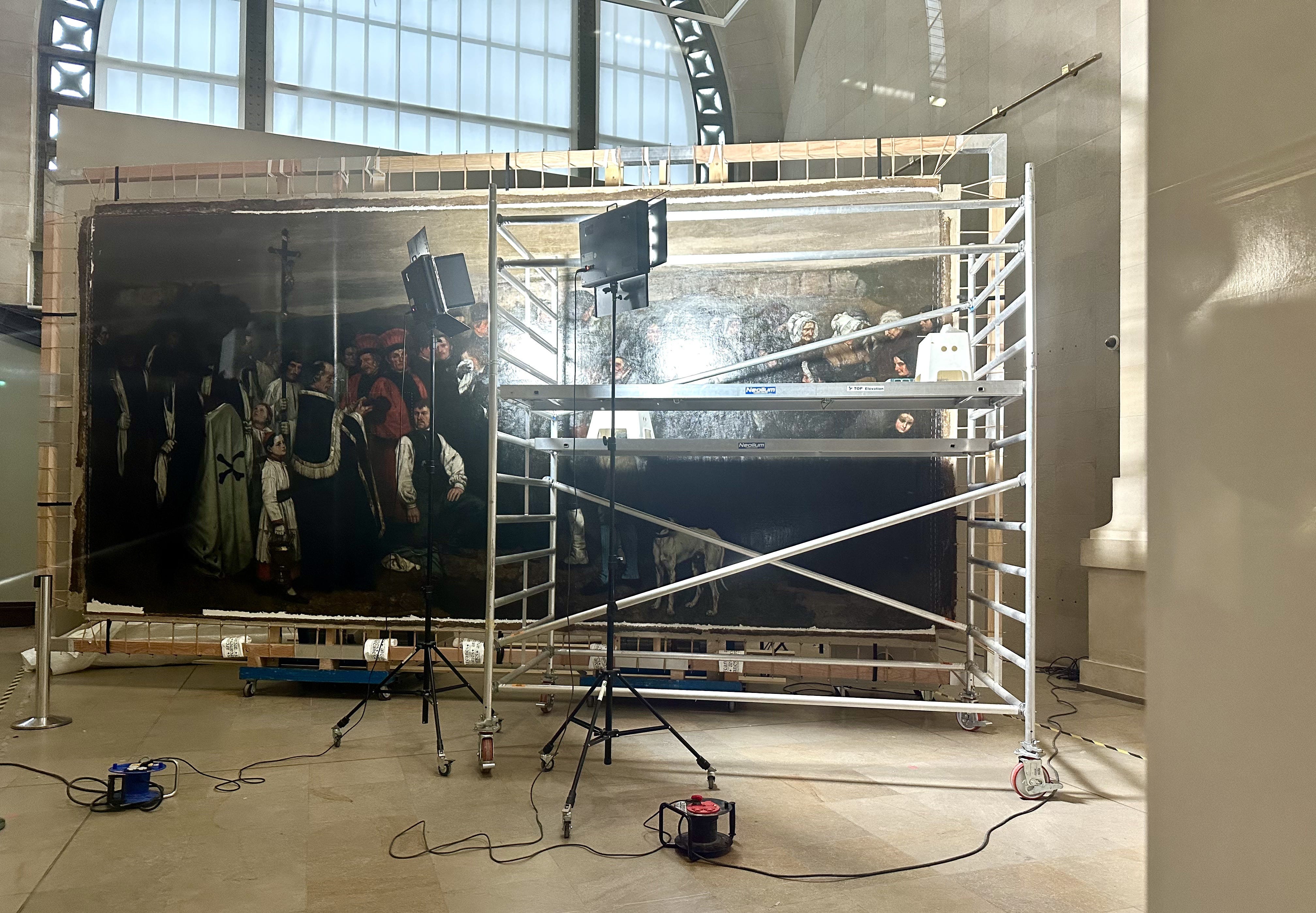
I spent much of my career in the fashion business reporting from backstage at shows in Paris, Milan, New York, and London. Seeing new collections up close was always exciting, but nothing compares to the thrill of my recent visit “backstage” at the Musée d’Orsay where I had the opportunity to slip into the museum before it opened and take in the astonishing art with nary another being in sight. I was on a mission to see the restoration work on Gustave Courbet’s realist masterpiece, A Burial at Ornans, which has been happening in a side arcade of the main gallery for almost a year. Because the painting is so large, the work could not easily be moved, so the team of Italian and French restorers set up their scaffolding and lights right in the museum. Visitors can watch as they remove several layers of old varnish which had thickened over decades, obscuring many of Courbet’s colors. Due to humidity and heat, the six meter long canvas was so fragile restorers had to stretch it on a frame with rubber bands. In the process they discovered an extra fold of canvas along the bottom of the painting which may reveal more information about the work that has not yet been seen. Additionally two ghost figures were uncovered while removing varnish layers.
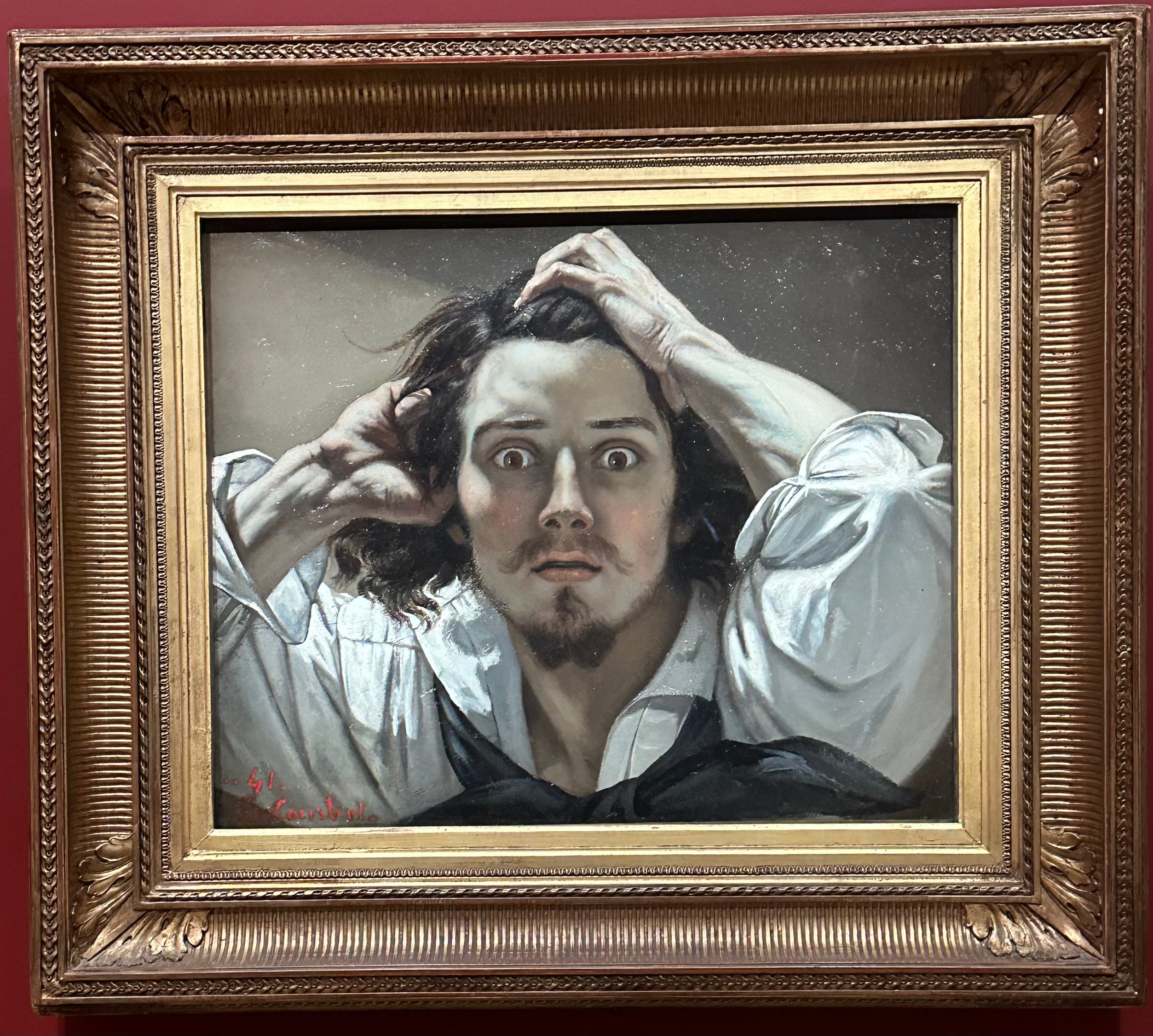
An added bonus inside the museum is the opportunity to see Courbet’s famous self-portrait, The Desperate Man, or Le Désespéré which has been out of the public eye for nearly 20 years. The French had lost sight of this 1843 masterpiece — one of the artist’s earlier works—only to discover it had been bought by the Qatar Museum. It will remain at the Musée d’Orsay for five years before being transferred back to Doha.
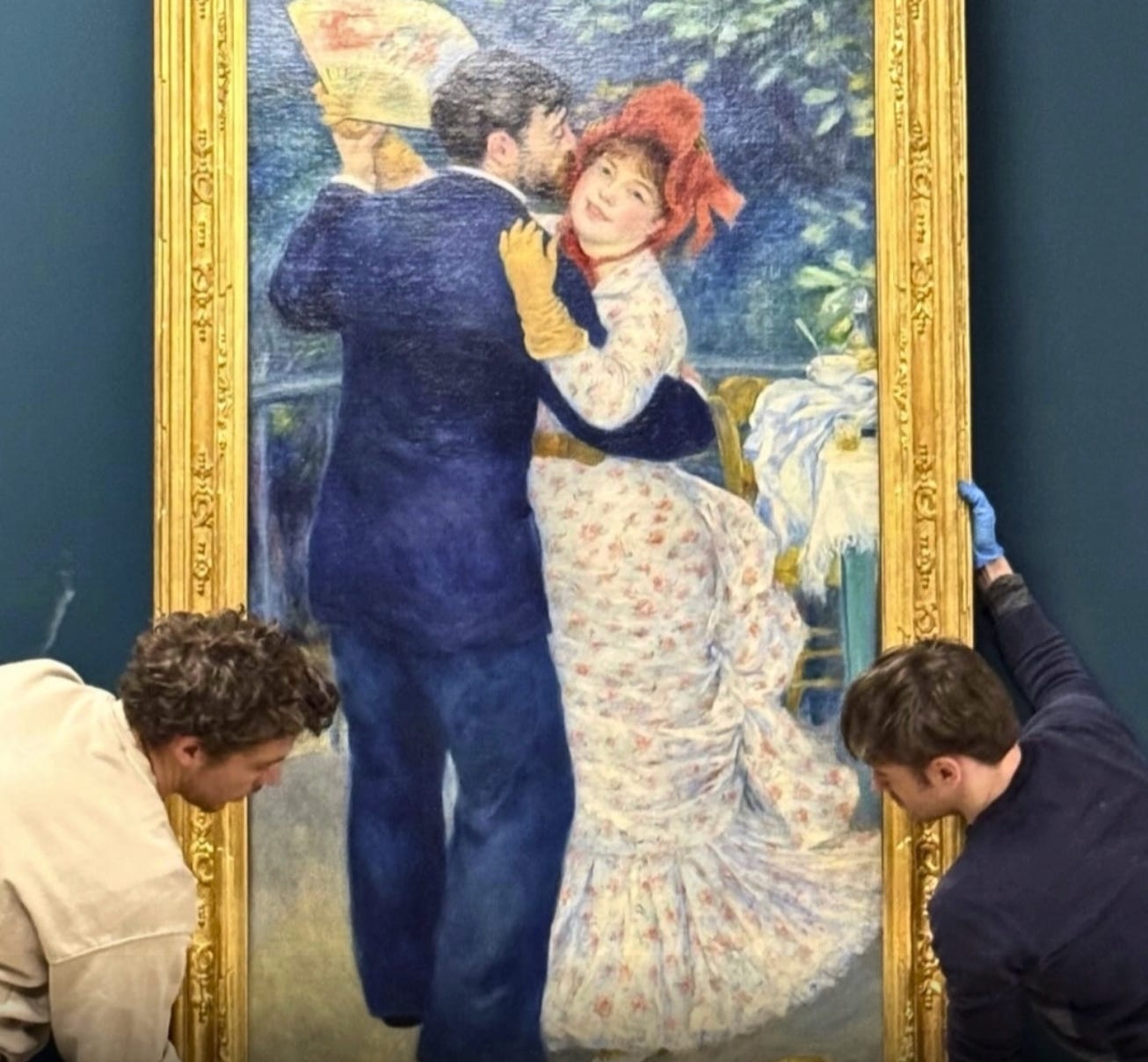
On a lighter note, today the blockbuster exhibit Renoir and Love: A Joyful Modernity (1865-1885) opens at the Musée d’Orsay and runs through July 19th alongside a companion exhibit of the artist’s drawings. The two exhibits combined make up the first major Renoir retrospective in Paris since 1985. I can’t wait to see them. KB
The Mahjong Maven


We’ve known Lauren du Pont since our days at Vogue where she was the accessories director before moving on to work at Ralph Lauren, Estée Lauder, Clinique, and AERIN. Most recently, she founded LO&Co, a Mahjong accessories brand which debuts this month. Editors@Large got the scoop:
Everyone seems to be obsessed with Mahjong! How did you get into it?
I first learned to play with an amazing teacher (Liz Busch, aka @mahjongliz). I was instantly hooked. Mahjong is so much more than a game—it’s a way to gather and connect. You can chat and catch up or be silent and dive fully into your strategy. I also love how easy it is to host a mahjong gathering. Snacks in a pretty bowl and a beautifully set game table. That is all you need!
Tell us about your mats. Where are the fabrics from?
I have always loved vintage textiles. My basement is full of rolls from estate sales and discontinued fabrics I’ve collected over the years. My Mahjong mats are inspired by my fabric collection and are made in the UK. I started making them last summer when I couldn’t find exactly what I wanted. That led to an entire collection of pieces for hosting mahjong. We launched on March 16th; the full collection arrives in May.
You have gotten very into gardening and crafts, specifically the horticultural arts. Can you tell us about that?
There is nothing better than tinkering in the garden. It is a place to dream and create, gardening feels hopeful. You plant your bulbs, and they almost always come up, no matter what is going on in the world. I love this David Hockney quote: “Do remember, they can’t cancel the Spring.” I have also fallen in love with the botanical arts, i.e. creating art from natural materials. My latest challenge was to design an Art Deco pendant. Can an almond be carved into a jewel? Yes….it can!
You have always been great at spotting trends. What are you excited about now?
When I was at Vogue In my twenties, I would return from the European shows with trend reports. Maybe it is PTSD—but I’m no longer obsessed. While I appreciate trends, I don’t feel the need to chase them. I love things that are personal, layered, vintage, and timeless. If you love something, try it.
Melancholy, Baby


Before it was medicalized and labeled as low-grade depression, melancholy was considered an admirable state, the “sweet sadness” serving as an inspiration for artists and musicians throughout the 19th century and well into the 20th. Two shows in NYC evoke that mood, one that seems especially appropriate at this bleak, last blast of winter moment. Éduard Vuillard: Early Interiors at Skarstedt (through April 25) celebrates the master of domestic anomie, who was artistically innovative but whose world centered on his unhappy home (he lived throughout his life with his mother and sister, whose tense relations infused much of his work). Vuillard flattened the picture plane into a whirl of mixed patterns, shadows, and silhouettes, where every figure seems fixed place, a fleeting moment pinned like a beautiful, dark butterfly.
For photographer David Armstrong the medium was very different, as were the manners and mores he depicted, but the mood is much the same. Armstrong plunged into New York’s downtown bohemia in the late 1980s, just as AIDS was beginning to spread. His softly lit portraits captured a scene even as it was starting to disappear. Overcome by the loss of so many friends and loved ones, in 1997 he switched to crafting out-of-focus, elegiac interiors and landscapes, before ultimately returning to portraiture. As this beautifully installed show at Artists Space (through May 23) proves, by the time he died in 2014, Armstrong was a master at delineating a world where loss was a constant presence. MB
Winner Take All
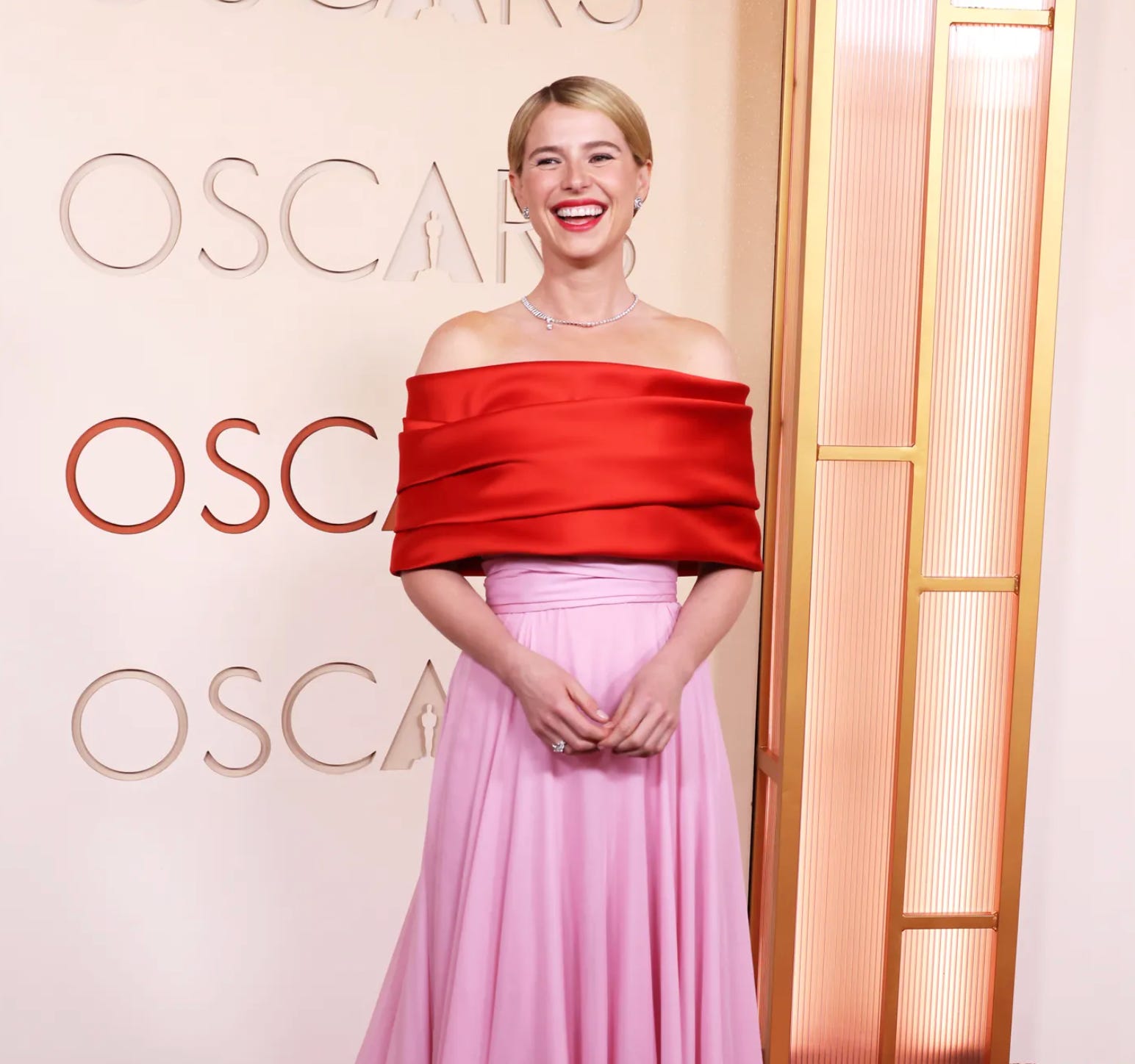
The battle of the French luxury brands raging in Paris continued on Oscar’s red carpet
