

Devil's In The Details...
We lived this movie back in the 1990s, and lived to tell the tales. Plus, tips from the stylist behind red carpet stars and a look at the art works inspired by an iconic summer idyll.
The Bezos Ball
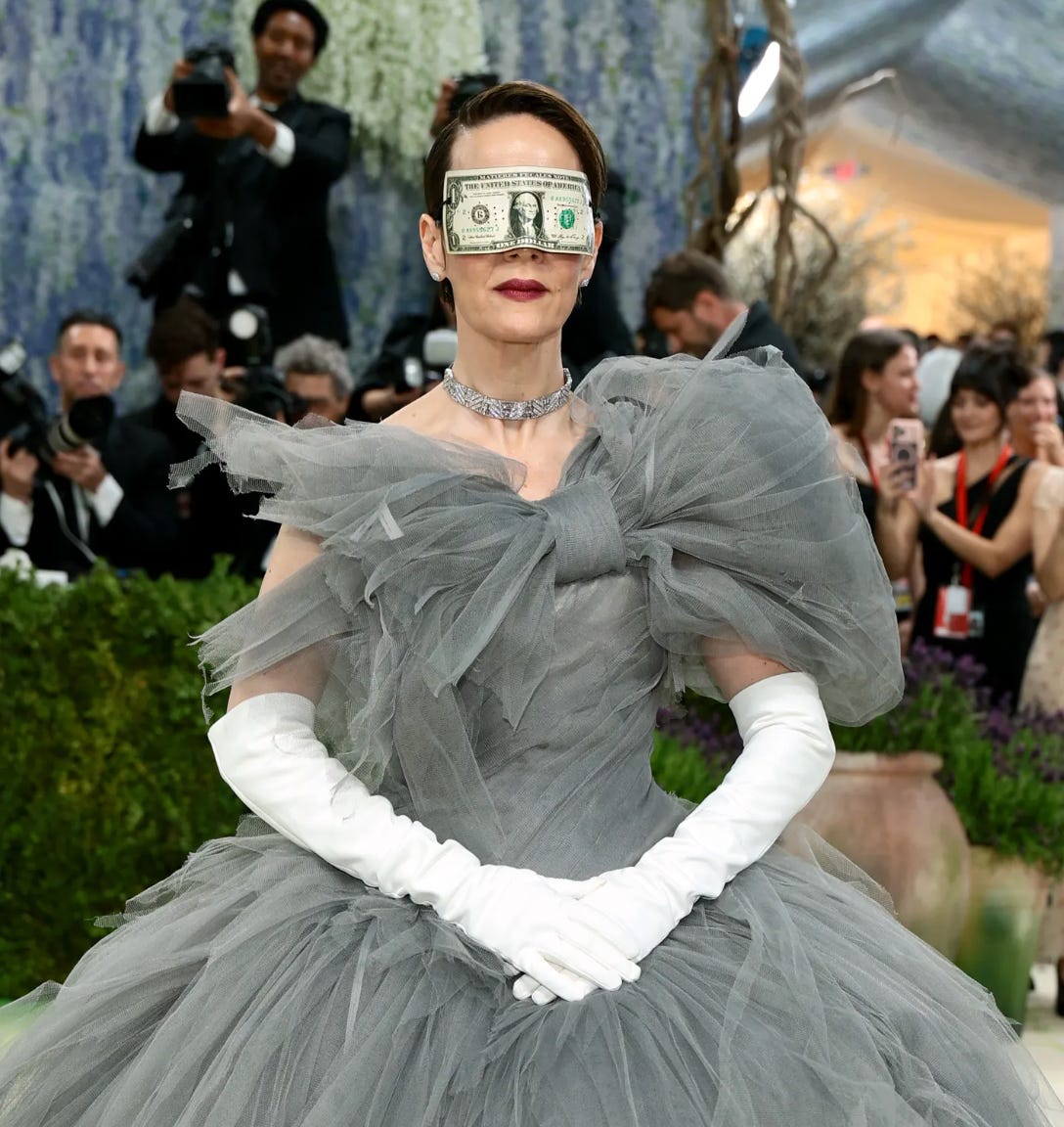
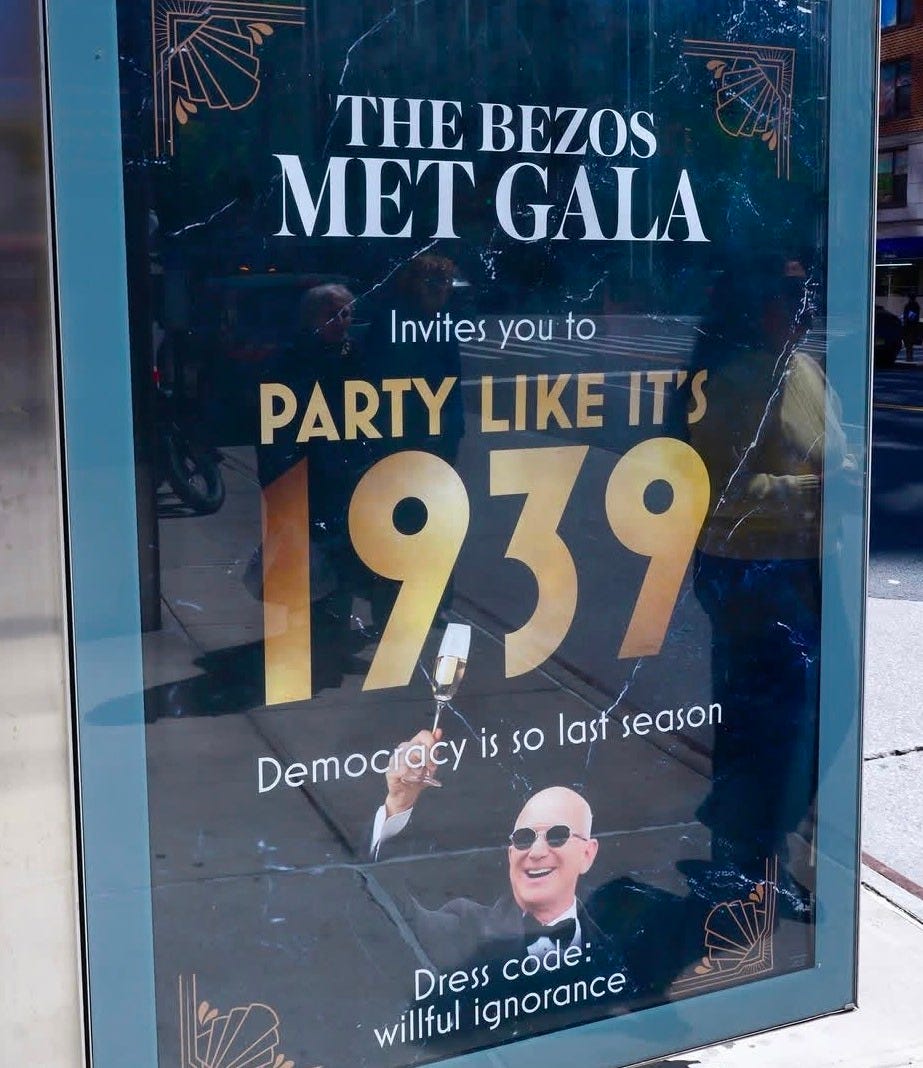
All the Gilded Age spoils on Jeff Bezos’ Met Gala red carpet could not mask the fact that fashion’s biggest night is now owned by seriously unfashionable folks. All month long guerrilla groups have been protesting the Met Gala with signs mocking Bezos who, along with his wife Lauren Sánchez Bezos, was the honorary co-chair. One group even placed 300 small bottles filled with fake urine around the Metropolitan Museum—a spoof on the fact that Amazon employees have to pee in a bottle. Another sign posted on bus stops around the museum called it the “Amazon Prime Gala.” Mayor Mamdani, Meryl Streep, and Zendaya skipped the gala, and Timothée Chalamet and Jimmy Fallon opted for the Knicks game instead, but plenty of celebs showed up wearing the “Art is Fashion” dress code. On the eve of the Tony nominations, Ragtime star Joshua Henry performed on the red carpet, in red, and Nicole Kidman arrived early, easily the best dressed in a red sequin and feathered Chanel gown.


It’s Not Turquoise, It’s Not Lapis…
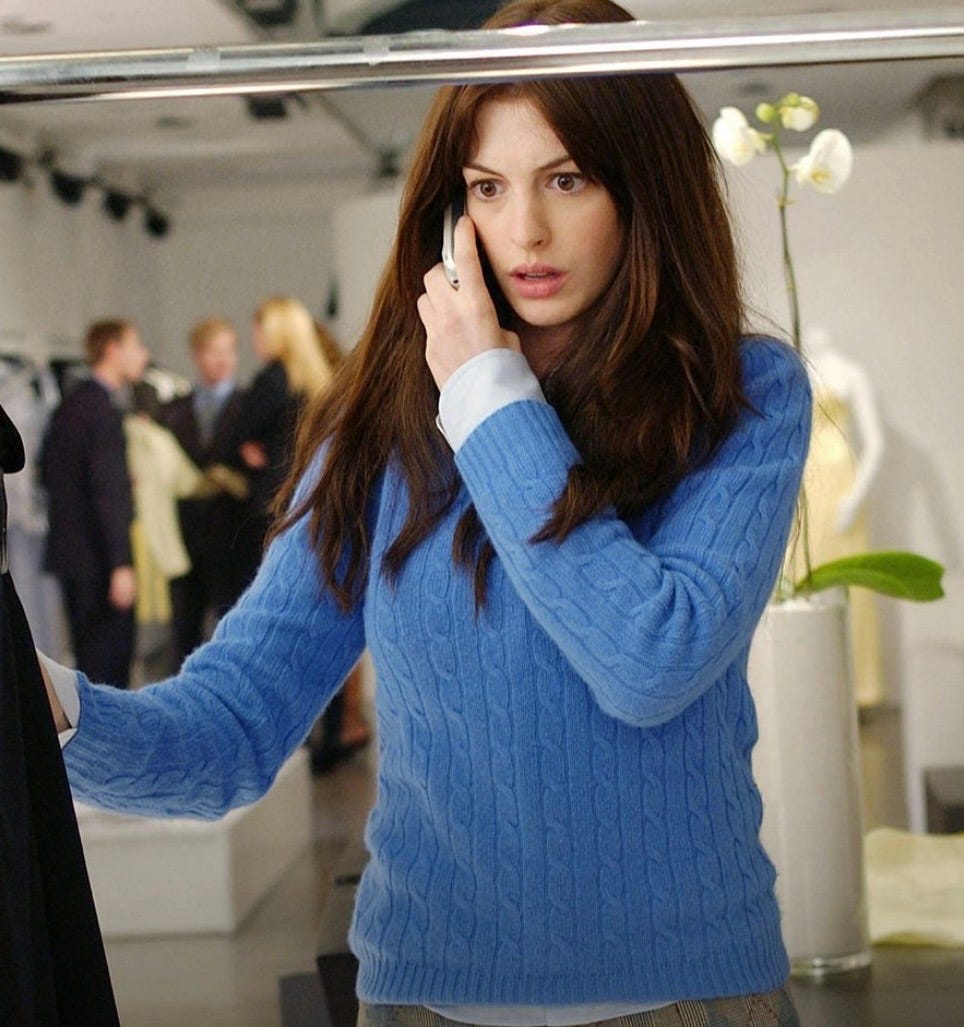
Just in time for the opening of The Devil Wears Prada 2, every former Vogue assistant and employee seems to be weighing in with their “Miranda Priestly” stories. And between us, we have many of our own. Suffice it to say that parts of the original movie strike me as more fact than fiction. And the devil is truly in the details (that is all). There are so many familiar moments in the original movie—from assistants sprinting down corridors to the icy, epic take-downs of fashion stylists with racks full of the wrong looks. My favorite moment from the movie involves Meryl Streep. I had heard the actress wrote the “cerulean sweater” monologue herself and added it to the script—a fortuitous move as it made her character more sympathetic. But I wanted confirmation. So early one Saturday morning shortly after the movie came out in the summer of 2006 I was at Guido’s in Great Barrington, shopping for food. The place had just opened and there was only one car in the parking lot and one customer inside. It was Meryl Streep. She was standing over a display of fruit talking to herself. I seized the moment, introduced myself and asked her if the rumor about the monologue was true. Yup. Then she continued on, picking up pieces of fruit and talking to herself. I couldn’t resist asking her what was up. “Oh, I’m preparing for my next movie.” She was working her way into the Julia Child character. KB
Parts of the original Devil Wears Prada movie strike me as more fact than fiction.
During my years at Vogue, I was always friendly with Anna Wintour’s assistants and became close with a couple of them (the best way to get on the good side of your boss is through their assistants, after all). But strangely, I have little memory of Lauren Weisberger. She wasn’t there that long, and she may have been too busy taking notes to really engage with the rest of the staff. When her novel came out, I didn’t read it. It’s not my kind of book, really. But I do love a rom-com, so I was eager to see the film. Yes, there were ludicrous and over-the-top moments (that fashion shoot with models in animal masks!), but the movie got just enough details right that mid-way through, when my husband turned to me and asked if the film was accurate, I joked, “This isn’t fiction, it’s a documentary.” And it turned Anna into a pop culture star. Twenty years later, Vogue’s response to the sequel couldn’t be more different. The screening I attended was sponsored by Vogue’s Book Club and hosted by Chloe Malle, the new editor (or rather, head of editorial content). One detail the sequel does get right is that print magazines are in decline (though I don’t expect to see Anna flying coach anytime soon). Just as Vogue is a shadow of its former self, so is this Devil. MB
Star Stylist
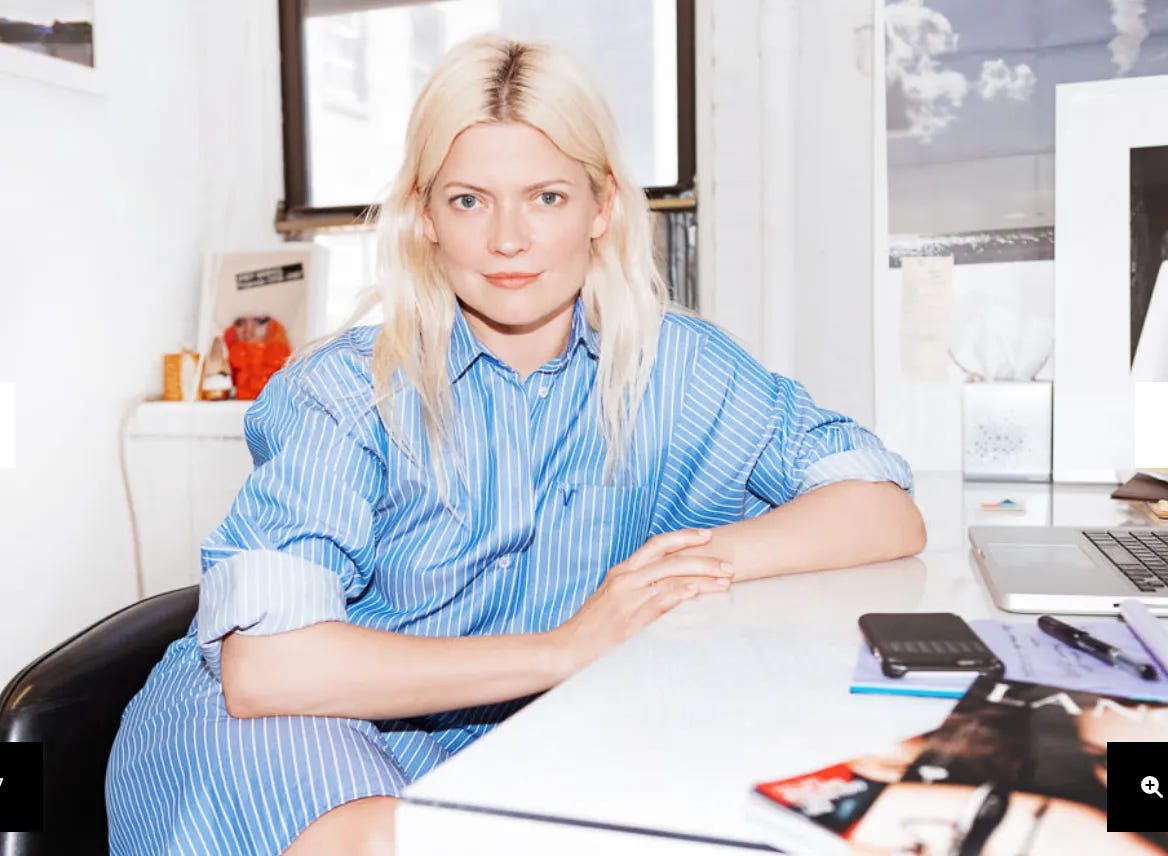
We should have known Kate Young would become one of Hollywood’s preeminent stylists when we first met her at Vogue. As Anna Wintour’s assistant she was the picture of grace under fire. Always calm and with a bright, warm smile. She went on to style editorial and advertising shoots for brands like Prada, Dior, and Chanel. Today, Kate dresses stars like Dakota Jackson, Margot Robbie, and Michelle Williams —Just to name a few. We caught up with her to get a few red carpet style secrets.
What was your breakthrough moment on the red carpet? When you realized this is what you really wanted to do?
There really wasn’t a clear moment because I continued doing both editorial and red carpet for years. There was a moment when I realized celebrity was more important though—I put a designer’s dress on a magazine cover and didn’t get even an email of thanks and the following week had a client wear a dress on the red carpet and got a giant bouquet of flowers and a thank you note.
There was an also a moment after Instagram was invented and I started posting red carpet photos of my clients. Suddenly everyone at shows kept congratulating me. It was strange and I frankly didn’t understand what was happening. Before Instagram people knew I “dressed celebrities,” but I don’t think they realized who and also what that meant. Instagram made it very clear what I was doing with my professional life.
Most difficult thing to address in red carpet wardrobe?
That a look has to function in three dimensions and also has to look good in a photo. It’s not as important that it looks good in real life—for instance in real life I LOVE black lace over nude silk. I think it’s beautiful and elegant… but in a photo it usually looks like your skin is bursting thru the lace and it’s utterly repulsive. That’s the kind of dress I tell clients to wear to a friend’s wedding… because it matters more what you look like in person at an event like that
Your favorite evening look ever? For yourself or for a client?
Tina Chow. Really any photo of her in the evening. Her style, makeup, accessories… perfection
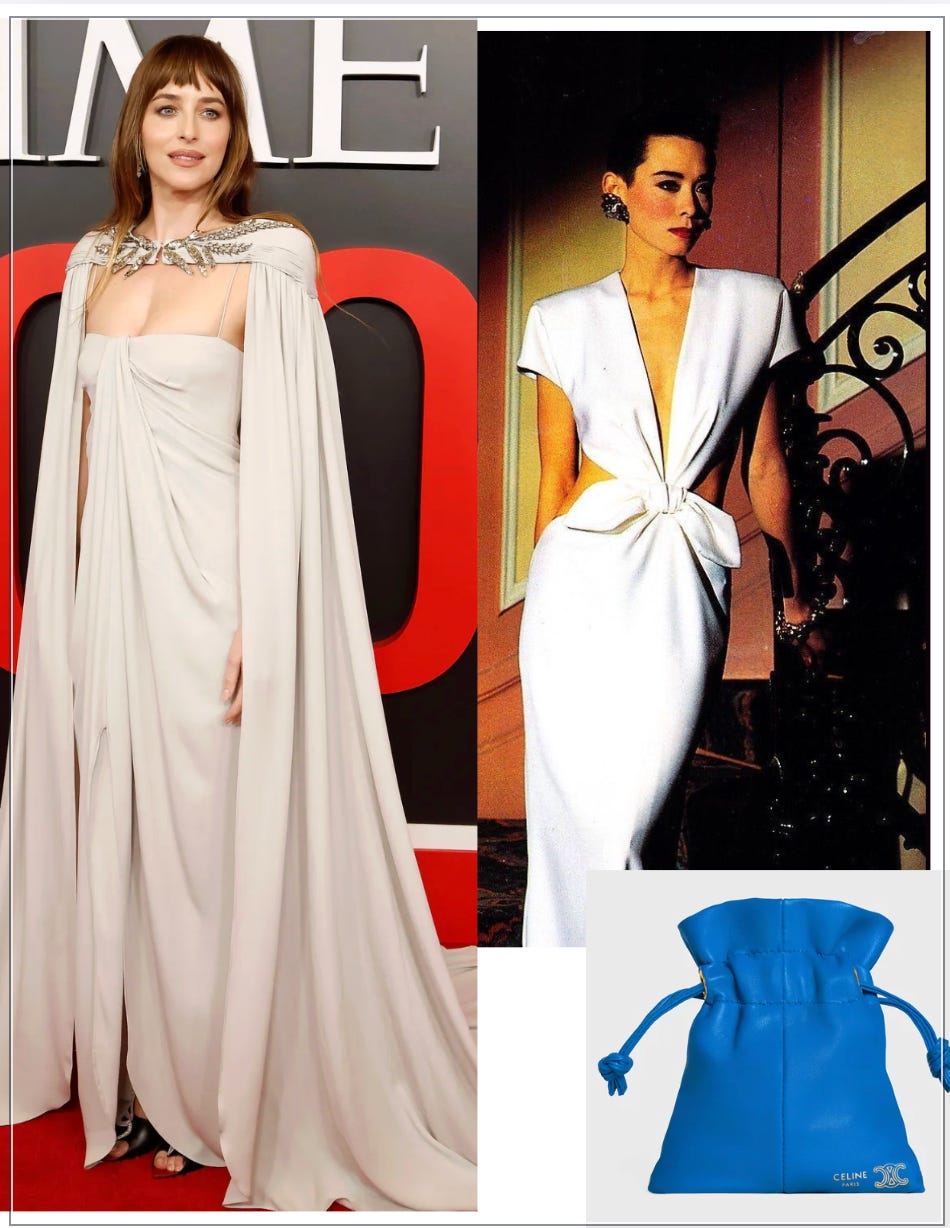
What can women who love dressing up learn from the red carpet?
Restraint. Take off your personal everyday jewelry. You don’t need to wear everything you’ve ever received as a gift with the big earrings you got for the event. It annoys me so much when I see someone all dressed and made up and they’ve got a stack of weird tiny gold chains on their wrists, or their watch.
The must-have spring 2026 look you’re going to splurge on?
That bright blue pouch bag from Celine.
Your favorite place to shop?
Korea. My friend Victor lives there now and the shopping makes NYC and Paris seem shabby and boring. Every store blows your mind
Advice for anyone getting ready for a big event?
Get the right undergarments after you find the dress and before you see your tailor. Buy the shoes. Then go see the tailor.
Sun and Sea and Creativity

With its dramatic landscape of sand dunes, scrub, and endless blue ocean, and its remote location accessible only by ferry, Fire Island has attracted artists, writers, and intellectuals for a century. The thin sandbar off Long Island became a legendary sybaritic summer escape for gay men and lesbians, but also a place of creative exploration. A new book, Fire Island Art:100 Years, includes the requisite depictions of hunky men on the beach and works by such big names as David Hockney and Andy Warhol. But it goes far beyond that, to show how the relaxed ethos and stunning light


inspired generations, starting with the stylized 1930s and ’40s photographs by PaJaMa, the trio of figurative artists Paul Cadmus, Jared French, and his wife, Margaret French, whose lifestyle exemplified polyamory avant la lettre. Essays examine works created by Peter Hujar and Paul Thek, Sam Wagstaff and Robert Mapplethorpe, and Wolfgang Tilmans. Among its many surprises is a look at the summer Richard Avedon and his wife spent in Cherry Grove with Lillian Bassman, and an elegy for the poet Frank O’Hara, who died after being hit by beach taxi on an island with no cars. Like the island itself, the book’s ethos is generous and encompassing, including lesser-known local artists, a look at how lesbians transformed Cherry Grove, and even an examination of filmmaking on the island (and not all of it was porn). MB
